
Shipment review before vehicle selection
We first establish the classification, physical form, quantity, temperature, loading method and route. The transport setup is confirmed only after that review.
Wello Cargo · WNI 10098014
We provide domestic and international road transport for materials classified as Category 3 animal by-products. We select the transport solution, coordinate documentation and manage the shipment from loading to delivery.
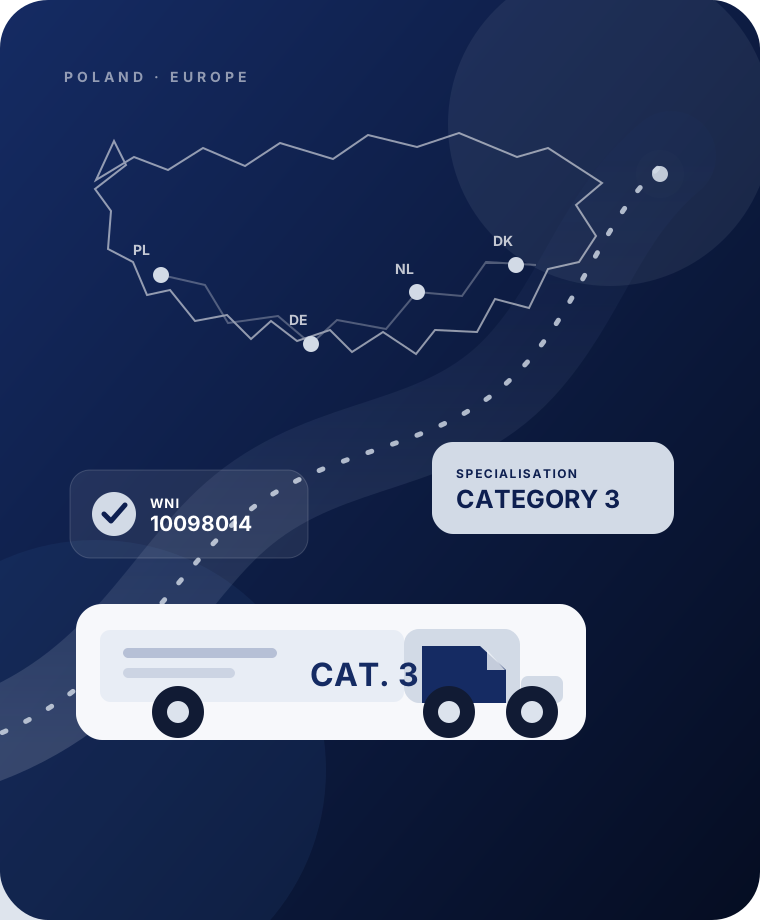
Classification, physical form, weight, route, temperature, loading method and documents are needed to prepare the correct solution.
Wello Cargo is a Polish transport company specialising in Category 3 animal by-products. We handle domestic and international shipments with a process focused on material identification, trailer selection, documentation and traceability.
Narrow specialisation
The content, enquiry structure and operating process are built around one field: Category 3 animal by-products transport.
We first establish the classification, physical form, quantity, temperature, loading method and route. The transport setup is confirmed only after that review.
Dry bulk, liquids, packaged goods and temperature-controlled loads require different equipment and operating conditions.
We verify the data required for execution, coordinate transport documents and maintain information flow between consignor, carrier and consignee.
Who we work with
We handle enquiries from operators that generate, process, store, trade, dispatch or receive Category 3 materials.
Recurring and one-off deliveries of Category 3 raw materials and derived products.
Collection and transport of confirmed Category 3 materials generated in production processes.
Transport of materials authorised for the relevant intended use under their classification.
Route coordination between plants, warehouses and receivers in Poland and across Europe.
Example materials
Article 10 of Regulation (EC) No 1069/2009 covers a broad range of materials. The groups below are examples, not an automatic legal classification.
Important: the term “animal waste” does not determine the category. Classification depends on the source, condition, production process and intended use. Before accepting a shipment, we require confirmed classification from the operator responsible for the product.
Transport setup
Vehicle type, hygiene requirements, containment, temperature and loading or unloading method are confirmed for every shipment.
Packaged loads, pallets, containers and big bags.
Dry bulk materials where the load and unloading technology allow it.
Powders, meals, granulates and other dry bulk products.
Fats, oils and other liquids requiring sealed transport.
Loads for which controlled temperature has been confirmed as necessary.
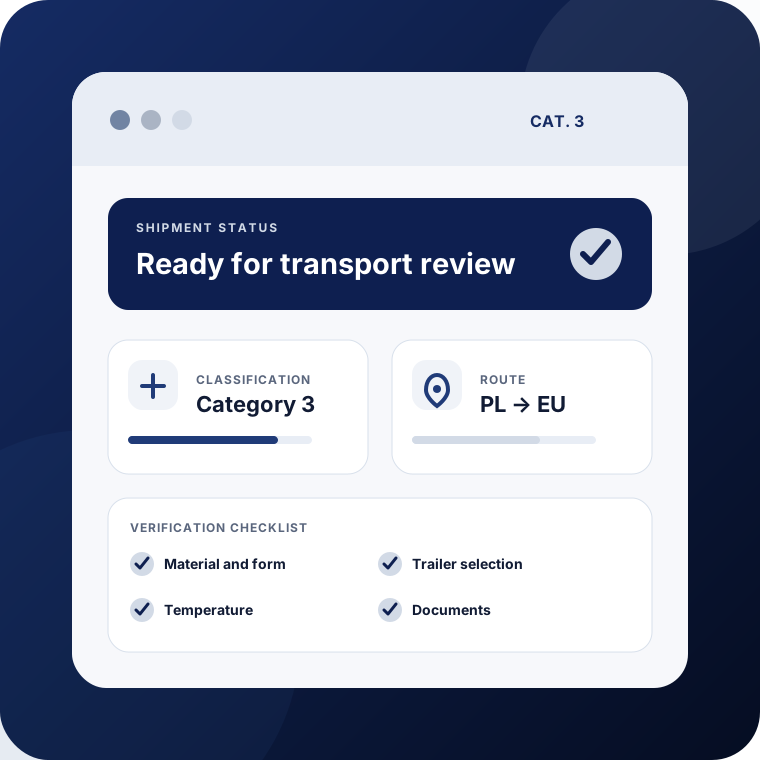
Before transport is confirmed
“It is Category 3” is not enough. The correct solution depends on the operating and documentary parameters of the specific consignment.
How we work
Each stage has one purpose: reduce the risk of an incorrect setup, missing information or problems at loading and delivery.
You provide the route, material, quantity, physical form, date and requirements.
We check data completeness, classification and conditions at both sites.
We select the trailer type and timing, then present the operating terms.
We coordinate loading, the route, communication and delivery.
We confirm completion and the agreed documentation flow.
The European Commission describes Category 3 as low-risk material. Classification, identification, transport conditions, documentation and traceability rules still apply.
Article 21 of Regulation (EC) No 1069/2009 provides that transport is generally accompanied by a commercial document and, where required, a health certificate.
The documentation should identify the origin, destination, quantity, material description and any required marking.
Article 22 requires consigning, transporting and receiving operators to keep records of consignments and related documents.
Containers, vehicles, packaging, category separation and cleaning or disinfection procedures must match the requirements applicable to the shipment.
Faster quotation
The more precise the input data, the faster we can verify feasibility and select the appropriate transport setup.
FAQ
These answers are general information. Final requirements depend on the specific material, route and decisions of the competent authorities.
Category 3 covers materials listed in Article 10 of Regulation (EC) No 1069/2009. It is the low-risk category in the EU animal by-products system, but classification, identification, transport, documentation and traceability rules still apply.
No. The description “animal waste” is not sufficient. The category depends on the source, condition, production process and intended use. A confirmed classification is required before quotation.
Once classification is confirmed, shipments may include selected slaughter and cutting by-products, processed animal proteins, dry bulk materials, fats and oils, egg products, former foodstuffs and selected hides, horns, hooves, bristles, feathers and wool.
Depending on the physical form and conditions of the load, the solution may involve curtain-sided or enclosed trailers, tippers and walking floors, silos, tankers, refrigerated trailers or insulated bodies. The specific setup and availability are confirmed after review.
Yes. We coordinate domestic and international road transport on European routes. Feasibility, timing and equipment are confirmed after receiving complete load data.
The scope depends on the material and route. Under Article 21 of Regulation (EC) No 1069/2009, transport is generally accompanied by a commercial document and, where required, a health certificate. The documentation should identify the origin, destination, quantity and description of the material.
The route, weight and physical form, trailer type, loading and unloading method, temperature requirements, requested date, frequency, hygiene requirements and documentation all affect the price. Each shipment is quoted individually.
Send the route, material description and classification, quantity, physical form and packaging, temperature conditions, loading and unloading method and requested date. We will review the shipment and propose a feasible solution.
Transport enquiry
This form is designed solely for Category 3 animal by-products transport. You can also send the details by email or discuss them by phone.